- “Mate, there’s a job going. Want to come to Djibouti?”
- “Very funny. Seriously, though?”
- “I’m serious. There’s work.”
- “Okay, but where?”
- “Djibouti.”
- “Right. And are we flying there, or do we go through the wardrobe?”
That was more or less the conversation that led to one of the strangest trips of my life.
We were going to Africa to build a gym on an American military base. My previous construction experience consisted mainly of IKEA furniture and LEGO. I knew even less about Djibouti. As far as I was concerned, it could have been a country, an animal, or something you shouldn’t order without a picture on the menu.
Naturally, I agreed before asking any sensible questions, as any responsible adult would.
Then I checked the map to make sure the place actually existed.
First, You Have to Get There
On 19 October, Krystian and I left my hometown of Elbląg for Warsaw, where we met Kuba, the third member of our team.
Our adventure began at Luca, a Romanian bakery. The food was excellent, and somehow, it was also free. Something hadn’t gone through in their system, so the staff told us it was on the house.
Free food before we’d even reached the airport. An excellent start.
We had roughly nineteen hours of travel ahead of us, with connections in Vienna and Addis Ababa. I’m not afraid of flying. I just don’t particularly enjoy spending hours in a cramped seat and getting up every time someone needs the toilet.
The Witcher audiobook and the view of the clouds below us kept me sane.
In Vienna, we had time to visit Leberkas-Pepi. A bread roll with a thick slab of meat might not sound like a reason to enjoy a layover, but the chilli cheese and pizza versions make a convincing case. If you’re ever in Austria, give it a try!
We had to pay this time. Our financial winning streak hadn’t even made it out of Europe.
Addis Ababa meant another six hours of waiting. Seeing Ethiopia from the air at night was brilliant. Sitting in the airport for six hours was considerably less so. At some point, I started studying the Ethiopian alphabet. It reminded me of the cipher in the Sherlock Holmes story “The Adventure of the Dancing Men”, except everyone around me apparently knew how to read it.
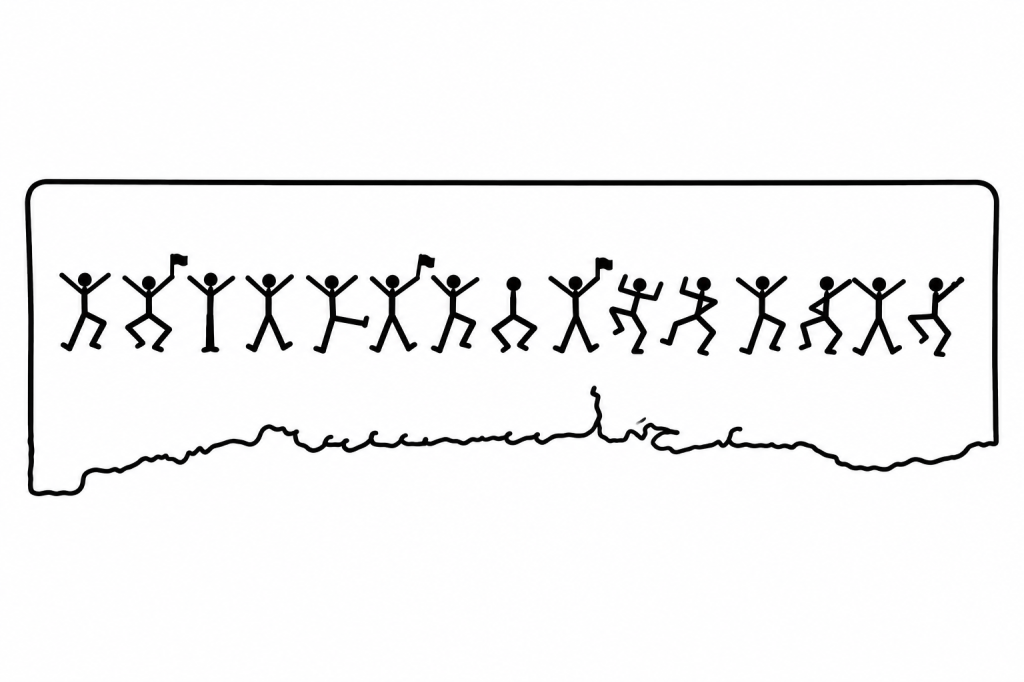
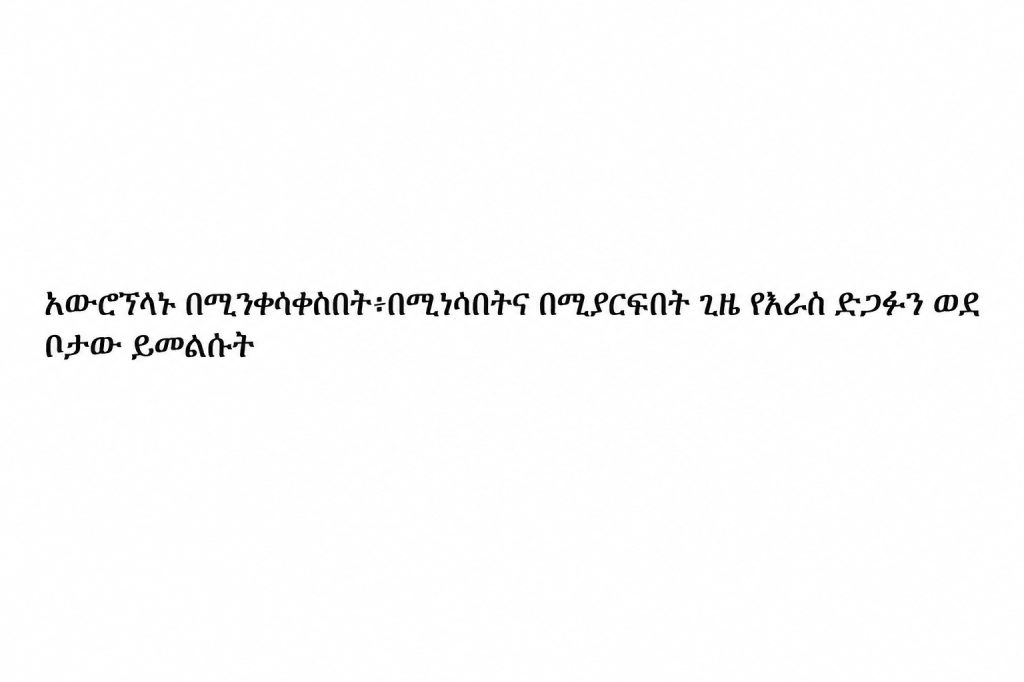
Sorry, Ethiopians!
Eventually, we boarded our final flight.
Next stop: Djibouti.
Welcome to the Oven
Even from the air, the landscape looked unlike anything I knew.
Military compounds, enormous yards full of trucks and containers, and tightly packed neighbourhoods where people lived in makeshift homes that looked more like garages. Sand, corrugated metal, concrete. I watched it all with the curiosity of someone who still hadn’t quite accepted that he was about to land there.
Then we stepped outside.
The temperature was around 36°C. It felt as though someone had opened an oven and invited us inside to check on the pizza.
There had already been an awkward moment at passport control. When the officer checking our visas saw which hotel we were staying at, he pulled a face and made a less-than-enthusiastic comment about our expensive accommodation.
Later, our driver estimated that an officer like him might earn around $300 a month. Our hotel bill for the three of us was roughly $3,000 for the week.
I wouldn’t be happy at his place either.
Nick, our contact from the base’s support staff, met us at the airport. He wasn’t a soldier. His job was to drive us around, help organise the work, and make sure three Polish blokes didn’t wander somewhere they definitely shouldn’t.
We hit it off almost immediately.
During the drives, Nick and the local staff working with him told us about the country: the heat, everyday life, politics, and khat, a plant sold on the streets whose leaves are chewed for their stimulant effects.
A drug, in other words. Not a local salad :]
Our drivers told us it was legal, brought in from Ethiopia, and widely used. We even saw children chewing the leaves. Seeing it in person was more unsettling than hearing about it.
Outside the windows, we passed uneven roads, neglected buildings, and piles of rubbish. Between them, people went about their daily lives.
We were on our way to an American military base.
Why Does Everyone Have a Base Here?
Djibouti was a French colony until 1977. Today, it is officially a republic, but in practice it operates as a dictatorship.
It also has an exceptionally valuable address: at the entrance to the Red Sea, near the Bab el-Mandeb Strait and a major shipping route leading towards the Suez Canal. The government earns revenue by leasing land for foreign military bases. The United States, China, France, Japan, and Italy all have facilities here.
Geopolitics is complicated. Collecting rent is rather more straightforward.
America, Through the Gates
Our workplace was Camp Lemonnier.
Like most people raised on American films and cartoons, I had certain expectations. Hollywood had spent years preparing me for this moment.
Obviously, I wasn’t expecting R2-D2 to welcome us.
And that was a mistake, because there was a mailbox shaped and painted exactly like him right at the entrance.
Apparently, watching Star Wars counted as cultural preparation after all.
Inside, there were helicopters, armoured vehicles, and plenty of other military equipment I wouldn’t even attempt to identify. My knowledge of Star Wars vehicles was considerably better than my knowledge of the real ones.
Once the paperwork was done, Nick took us to the hangar where our equipment was waiting. Pallets, boxes, machine components. A lot of machine components. Nearby stood the gym where we were supposed to assemble everything.
Thankfully, it had air conditioning.
There was just one small problem.
The old machines were still inside.
People were still using them.
I looked at the equipment, then at the gym, then back at the equipment. IKEA hadn’t prepared me for this stage.
Fortunately, Nick quickly arranged some help. Soldiers started clearing part of the space, and we were offered food and a ride to the hotel. We could start work the next morning.
We said we’d eat, then get straight to it.
After nearly nineteen hours of travel and roughly one hour of sleep, this proposal met with some disbelief.
“You guys are crazy.”
Good thing they didn’t know how little I’d slept before leaving Poland.
We went to Pizza Hut first. By car. It was about 200 metres away.
As it turned out, we’d be driving pretty much everywhere, even within the base. Regulations, I guess.
The building housing Pizza Hut also served as a social space, with a bar, pool tables, and games. The walls were covered in unit emblems and logos, several featuring familiar-looking imagery: a Rebel Alliance symbol, something resembling House Bolton’s flayed man, and samurai helmets.
First R2-D2 at the entrance, now this. Apparently, my years of watching films and playing games were finally becoming useful professional qualifications.
We had a plan: finish as quickly as possible and spend the rest of the trip doing something more interesting than tightening bolts.
Some Assembly Required
We worked late that first evening. By the time we stopped, we’d already made serious progress on the job.
The next few days followed a similar pattern: hotel, base, assembly, food, more assembly, then back to the hotel. I won’t pretend every machine came with a gripping backstory. Most came with a large number of parts that needed to be located and attached in the right order.
So, basically LEGO. Just heavier.
There was plenty to do, but the atmosphere made it very enjoyable. We spent most of the day joking around, while Nick regularly checked whether we needed anything.
Water? Protein bars? Beef jerky? A food break? A smoothie?
We were very well looked after.
The base felt like a self-contained town: gyms, pools, two large shops, a cafeteria, a barber, medical facilities, Pizza Hut, and Subway, plus pool tables, foosball, karaoke, and a PlayStation 5. We were told that personnel from other bases sometimes visited to enjoy facilities they didn’t have at their own.
All of it was for service members and authorised personnel. You can’t just walk in off the street, order a pizza, and ask for the Wi-Fi password.
We had the chance to see that world from the inside.
And sample its food…
Hollywood on a Tray
My first visit to the cafeteria, which people on base also called the “galley”, was an event in itself.
A huge room, signs on the walls, people in uniform, and those unmistakable cafeteria trays. It looked straight out of an American high-school film.
Or a prison film. The trays don’t give you much to go on.
For around six dollars, you could load your tray with an impressive amount of food. We approached this enthusiastically, determined to try as much American food as possible.
The enthusiasm didn’t survive every experiment.
A lot of it simply wasn’t to our taste. The same went for most of the American snacks and drinks we tried out of curiosity. The colourful packaging often promised more than the contents delivered.
For the three of us, the experience seemed to confirm quite a few of the stories about American eating habits we’d heard back in Europe. Between the long ingredient lists, mountains of snacks and brightly coloured drinks, and signs that appeared to recommend bread as “high-performance food” while telling us to eat nuts less often, we spent a fair amount of time looking at each other in disbelief.
By the end of the week, I was choosing what went on my tray much more carefully.
One day, I stuck to shrimp. Another day, just cheese toasties.
My ambitious culinary expedition had gradually become an exercise in identifying reliable supplies.
Still, I loved the place. I could be disappointed by lunch and perfectly happy to sit there, experiencing something I’d previously only seen on a screen.
Two Worlds and a Lot of Tyre Shops
In the evenings, we returned to the Ayla hotel, which we’d been told was the most expensive in the country. A well-kept building, plenty of comfort, and very few guests. Sometimes it felt as though we had most of the place to ourselves.
From the hotel, we could see the water, huge cargo ships, and military vessels. On base, we had stocked shops, air conditioning, and everything we needed. Between the two, we drove through a very different reality.
At first, the city felt strangely unreal to me. Like a film set, or a game someone had dropped me into for a week.
Then an uncomfortable thought began to sink in: I could close my hotel door that evening, take a shower, and turn on the air conditioning. In a few days, I had a flight home.
For the people we passed, this wasn’t some unusual adventure they could go home and tell their friends about. It was everyday life.
Among all those impressions, one particularly odd detail stayed with me: the tyre shops. There were so many that I started to suspect tyres might be the country’s unofficial second currency.
I can’t explain it. All I know is that if I ever need a tyre in Djibouti, I’ll know where to look.
Anywhere.
Promoted to General
By Friday, we were down to the finishing touches: arranging dumbbells and plates, positioning equipment, making final adjustments.
Nick sent a group of soldiers to help.
One of them walked up to me, stood straight, and asked what needed doing with the seriousness usually reserved for someone much further up the chain of command. I explained. He immediately relayed the instructions to the others, and the whole group got to work.
For a brief moment, I felt like a five-star general.
A few days earlier, my qualifications had largely involved LEGO. Now I was giving instructions to American soldiers.
My international career was progressing nicely.
By late morning, everything was ready. The gym was assembled, the equipment worked, and we could finally put down the tools.
We missed the official opening the next day.
A shame, but I was already familiar with most of the attractions.
I’d assembled the big toys myself.
Unless they’d brought in cheerleaders for the occasion, I doubted there was much left to surprise me.
High School Musical: Djibouti Edition
With the work finished, the trip began to feel like a very unusual holiday.
Nick deserved much of the credit. Almost all of it, actually. He could have limited his role to driving us between the hotel and the base. Instead, he showed us around, helped arrange things, and made sure there was always something new happening.
On Saturday, we also saw our first proper downpour. After the heat of the previous days, I thought the rain might cool things down.
Instead, the oven became a sauna.
Water swept dirt and rubbish along the streets, and the city quickly took on a different appearance.
Different didn’t necessarily mean better :]
We took a group photo beside the finished gym, then visited the shop, where Nick treated us to an assortment of snacks and Camp Lemonnier T-shirts.
He also gave us a tour of the base, showing us some of the other buildings and even the shelters.
Later, we watched the sun set over the base while enjoying our Subway sandwiches. For a trip that had started with a pile of machine parts, things were going rather well.
That evening, he also took us to karaoke.
Soldiers and commanders in costumes, singing and performing choreographed dances. I watched with the growing suspicion that we’d somehow ended up on the set of High School Musical.
With a slightly more military backdrop.
Later, we went to play table football—foosball, as the Americans call it. A few Italian soldiers approached us.
“Buongiorno!”
“Buonasera!” we replied.
We’d barely met and already disagreed on the time of day.
After introductions and a quick check of everyone’s nationality, we started playing two against two. We were doing well. Well enough that one of our opponents said, “Scusa!”, told us to wait, and disappeared.
He returned with his commanding officer.
A middle-aged man with an utterly unreadable expression. He stepped up to the table and destroyed us as though he’d spent his entire career preparing for that exact moment.
They brought in a specialist, won, and left.
🇵🇱 1–1 🇮🇹 Arrivederci!
The Polish Team Reports for Zombie Run
On Sunday, we visited a Djiboutian shopping centre. We’d been told it catered mainly to wealthy locals and military or base personnel, and the prices made that easy to believe.
A supermarket, a pharmacy, a handful of shops. By European standards, it was an ordinary shopping centre. Here, it felt like a luxury destination, with many everyday products costing considerably more than back home.
As far as we’d been told, it was the only shopping centre of its kind in the country outside the military bases.
Looking at the labels, we kept finding products imported from Europe, Egypt, or elsewhere. Among the items we checked, I couldn’t spot anything made locally.
Later, Nick and Mohamed took us for a drive and a walk around the city centre. As three visitors, we stood out quite clearly. Someone was always trying to sell us something, and walking through the streets gave us a different perspective from watching them through a car window.
There were flies everywhere, too. Another detail you don’t fully appreciate from an air-conditioned car.
Despite the unfamiliar surroundings, I felt more at ease than I had in quite a few places in France, although we were out with people who knew the city. Our drivers warned us about theft, taxi scams, and police corruption. On base, payments were card-only, which we were told helped avoid problems associated with handling cash. In the city, meanwhile, cash seemed to be the norm.
In the afternoon, we returned to base.
It was time for Zombie Run, a five-kilometre race around the base.
Before the start, the announcer called out the different nationalities. Americans, French, Italians, Spanish, Japanese. Each group responded with cheers.
“Nothing about Poland,” I muttered to Krystian.
A moment later, we heard:
“And let’s not forget our guests from Poland!”
The three of us shouted so loudly that people turned around.
Nick later claimed we’d been louder than the entire American crowd.
First competition won.
Unfortunately, we still had to do the running…
Five Kilometres in an Oven
I wasn’t ready.
I hadn’t been running for about six months, and mountain trips had done little to prepare me for racing in that heat and humidity.
It didn’t take long to get the reference.
Zombie Run.
That was becoming an accurate description of my technique.
I don’t usually take water on short training runs. This time, however, I was searching for a water station with the concentration of a man looking for rescue.
I didn’t find one.
No water station in that heat? At that point, I was prepared to classify it as torture.
They were actually trying to turn us into zombies.
With every kilometre, I became more interested in reaching the finish and less interested in my time.
I got there in just under twenty-seven minutes, at least according to the clock I saw as I crossed the line. I was drenched in sweat and thoroughly finished.
They were handing out ice pops.
Those simple, brightly coloured frozen tubes you had as a kid.
My younger self could never have guessed that the best one I’d ever taste would be on a military base in Djibouti, aged twenty-five :]
As I stood there trying to cool down, I thought about my plans for the Marathon des Sables. Five kilometres had just given me a fairly blunt assessment of my relationship with desert heat.
I also got another T-shirt from the race.
At least my wardrobe was thriving.
That evening, Nick took us out for dinner in the city, our first meal outside the base and hotel. Pizza, virgin mojitos, and conversation. After the race, I had no need for a more demanding itinerary.
It Started with a Phone Call
On Monday, it was time to leave. Part of me was looking forward to being home; another part didn’t want the adventure to end.
Would I go back? Honestly, I’m not sure. From what we saw, the city wouldn’t be my first choice for a sightseeing holiday. But the trip turned out to be one of the best adventures of my life—and I’ve had quite a few. Building a gym, exploring the streets, watching military karaoke, losing to an Italian commander at foosball, and nearly melting during a five-kilometre run made for a week I will never forget.
A huge thank-you to Nick. He was the reason so many memorable things happened between clocking off and returning to the hotel.
None of that was on my bingo card.
We said our goodbyes and headed to the airport for another long journey home.
I’m hoping to make a few videos about the trip, within the filming and publication restrictions. Keep an eye on my YouTube channel and follow me on Instagram for whatever comes next.
The next time someone calls with a job offer in a place whose name sounds like a joke, I’ll probably say yes again.
And if an unexpected opportunity comes your way, I’d encourage you to give it a chance too.
You can always check the map afterwards.
Can’t you?
If you want to be up to date suburbia our newsletter you may cancel any time!


If you enjoy read also …
- I Went to Djibouti to Build a Gym for the US Military !?
- Mont Blanc – The Final Steps to the Roof of Europe
And if you want to see more stories like this make sure to buy us a coffee!


Leave a Reply